
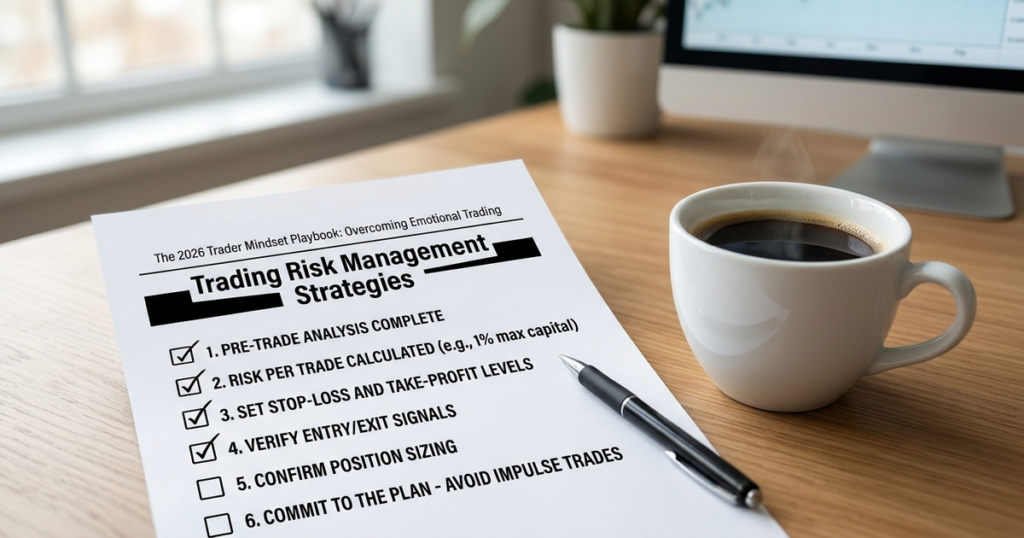
Trading Risk Management Strategies: A Practical Guide to Managing Emotions
Most traders believe they need a better strategy to become profitable. They spend months learning indicators, testing setups, and searching for the perfect entry point. Yet for many, the real challenge begins after the trade is placed. Fear, greed, impatience, and overconfidence often influence decisions far more than market knowledge itself.
The numbers reflect this reality.
According to a SEBI study, 91.1% of retail traders in India’s derivatives market incurred losses during FY2024, despite unprecedented participation and access to market education.
Many of these losses were linked not to a lack of information but to poor execution, oversized risk, and emotional decision-making.
This is where trading risk management strategies become critical. Successful traders understand that long-term profitability is rarely about predicting every market move correctly. Instead, it comes from controlling risk, protecting capital, and maintaining consistency through changing market conditions.

Why Emotional Trading Continues To Hurt Traders
Emotional trading remains one of the biggest reasons retail traders struggle to achieve consistency. Markets naturally trigger strong emotional responses because every decision involves uncertainty, risk, and the possibility of financial loss. Without proper trading risk management strategies, these emotions often influence decisions more than logic.
Fear may cause traders to exit winning positions too early. Greed may encourage excessive risk-taking. Frustration can lead to revenge trading after losses. Even experienced traders occasionally face these challenges, which is why successful professionals rely on structured trading risk management strategies instead of willpower alone.
The psychology of trading becomes increasingly important as account sizes grow because larger amounts of capital create stronger emotional pressure. Learning to manage these emotions often determines whether a trader survives long enough to benefit from their strategy.
Common Emotional Traps That Destroy Trading Performance
Most trading mistakes are not caused by poor market analysis. They are caused by emotional reactions that override logical decision-making. Understanding these emotional traps is often the first step toward developing better trading discipline and improving long-term performance.
The following emotional patterns repeatedly appear across traders regardless of experience level.
Fear Of Taking Losses
Many traders struggle to accept losses because losses feel personal. Instead of following their stop loss strategy, they move stops further away or hold losing positions, hoping the market will reverse. This behaviour becomes even more common among traders who constantly switch between indicators or look for additional confirmation after entering a trade.
In action vs indicator based trading, losses are unavoidable regardless of the approach being used. The difference is that disciplined traders accept predefined risk before entering a position, while emotional traders try to avoid losses altogether. Strong stop loss discipline helps traders understand that a small planned loss is far less damaging than a large emotional one.
FOMO And Chasing Trades
Fear of missing out causes traders to enter positions after a significant move has already occurred. Instead of following a planned setup, they react emotionally to market momentum.
This often leads to poor entries, unfavorable risk-to-reward ratios in trading, and increased frustration when the market eventually pulls back. Consistent traders understand that missing opportunities is preferable to chasing them.
Revenge Trading After Losses
After experiencing a loss, some traders immediately enter another trade hoping to recover their money quickly. This emotional response usually results in increased position sizes and lower-quality trade selection.
Effective risk management in trading prevents revenge trading by establishing clear daily loss limits and predefined rules before emotions become involved.
Overconfidence During Winning Streaks
Success can be just as dangerous as failure. Consecutive winning trades sometimes create a false sense of certainty, causing traders to ignore their position sizing strategy and take unnecessary risks.
A professional trader’s mindset treats every trade independently, regardless of recent outcomes. This prevents emotional highs from damaging long-term consistency.
Why Most Traders Focus On Strategies Instead Of Execution
Most traders find it easier to search for new strategies than to improve their execution. Learning a new indicator feels productive. Following the same risk rules every day feels repetitive. Unfortunately, consistency usually comes from the latter.
Many traders continuously switch systems because they assume poor results are caused by strategy weaknesses. In reality, their existing strategy may already be profitable if executed consistently. The real issue often lies in abandoning rules during periods of uncertainty.
This is where trading psychology becomes critical. The ability to follow a plan during stressful market conditions is often more valuable than discovering another entry technique. A trader who follows average systems consistently will often outperform a trader who executes advanced systems emotionally.
Strong trading risk management strategies create structure around decision-making. Instead of relying on confidence or intuition, traders rely on predefined rules that guide their actions regardless of market conditions. This reduces emotional interference and improves overall trading discipline.
It also highlights the importance of position sizing. After all, even a great trade may not make much difference if the position size is too small, while consistent gains with proper sizing can create meaningful long-term growth.
A 5-Step Framework To Build A Professional Trader Mindset
Developing a professional trader mindset requires more than motivation. It requires repeatable systems that support consistent behaviour during both winning and losing periods. The goal is not to predict markets perfectly but to execute consistently regardless of market conditions.
The following framework combines practical trading risk management strategies with behavioural habits that improve long-term performance.
Step 1: Build A Structured Pre-Market Routine
A structured pre-market routine helps traders begin the day with clarity instead of reacting emotionally to market movements. Reviewing planned setups, identifying key levels, and defining potential risks before the market opens reduces impulsive decision-making later.
Many traders notice improved trading discipline simply by spending fifteen minutes preparing before market hours begin.
Step 2: Use A Position Sizing Strategy To Control Risk
One of the most important trading risk management strategies involves determining position size before entering any trade. Understanding how to calculate position size in trading allows traders to maintain consistent risk exposure regardless of market volatility.
A reliable position sizing strategy prevents individual trades from causing excessive trading account damage. It also reduces emotional pressure because losses remain manageable and predictable.
Step 3: Strengthen Stop Loss Discipline
Strong stop loss discipline protects traders from turning small mistakes into major losses. Instead of adjusting exits emotionally, traders should define their stop loss strategy before entering positions and commit to following it.
This simple habit supports better risk management in trading and prevents emotional decision-making during periods of uncertainty.
Step 4: Maintain A Consistent Risk-Reward Ratio In Trading
Many traders focus exclusively on win rate while ignoring expectancy. Maintaining a healthy risk-to-reward ratio in trading allows traders to remain profitable even when not every trade succeeds.
A structured approach to risk-reward analysis also improves trade selection because traders become more selective about opportunities.
Step 5: Build A Daily Trade Review Process
A review process helps traders identify recurring behavioural mistakes. Recording trades, evaluating execution, and reviewing emotional decisions provide valuable insight into performance improvement.
Over time, these reviews strengthen both trading psychology and trading discipline by creating greater self-awareness.
How Trading Risk Management Strategies Reduce Emotional Decision-Making
Many traders assume emotional control comes from confidence or experience alone. In reality, emotional stability usually comes from structure. When traders rely entirely on judgment during live market conditions, emotions naturally influence decisions. This is why professional traders depend heavily on trading risk management strategies to guide their actions.
Well-designed trading risk management strategies remove uncertainty from key decisions before trades are entered. Position size, stop placement, acceptable loss levels, and profit targets are determined in advance. Because these variables are predefined, traders are less likely to make impulsive decisions during periods of market volatility. This creates a more stable trader mindset and improves overall consistency.
Strong trading risk management strategies also improve capital management in trading because they prioritize account protection over short-term profits. Traders who consistently follow predefined risk rules often experience smaller drawdowns and less emotional stress during losing streaks. Over time, this allows them to focus more on execution quality rather than daily profit fluctuations.
Another major benefit is improved trading discipline. Instead of reacting emotionally to every market movement, traders learn to trust their process. This shift strengthens the psychology of trading because decisions become process-driven rather than emotionally reactive. As a result, traders often experience better consistency, improved confidence, and greater long-term sustainability in the markets.
How Manas Arora Helps Traders Improve Execution And Discipline
At Manas Arora, our team believes that successful trading is not just about finding the right setup. More often, it is about executing a plan consistently and managing risk effectively. Many traders already have access to strategies and market knowledge, but they struggle to follow their rules when emotions take over.
That is why our focus goes beyond entries and indicators. Through structured learning, practical frameworks, and a strong emphasis on trading psychology, we help traders build habits that support long-term consistency. The goal is to simplify decision-making and help traders develop systems they can realistically follow in live market conditions.
Our approach incorporates trading risk management strategies, stop loss discipline, position sizing strategy, and regular performance reviews.
Explore our courses here!
FAQs on Trading Risk Management Strategies
How Can I Stop Emotional Trading?
The most effective way to stop emotional trading is by implementing structured trading risk management strategies before entering positions. Define your risk, position size, stop loss, and profit targets in advance. When decisions are made beforehand, emotions have less influence during live market conditions.
Why Is Trading Psychology Important For Long-Term Success?
Trading psychology influences whether traders can follow their plans consistently during periods of uncertainty. Even profitable strategies can fail when emotions interfere with execution. Strong psychological habits support better decision-making and improve long-term consistency.
How Does Position Sizing Strategy Improve Trading Performance?
A proper position sizing strategy keeps risk exposure consistent across trades. It prevents traders from risking too much capital on individual positions and reduces emotional pressure during market fluctuations. This contributes significantly to better risk management in trading.
What Is The Importance Of Stop Loss Discipline?
Stop loss discipline helps traders control downside risk and avoid large losses. Following a predefined stop loss strategy prevents emotional decision-making and ensures losses remain manageable even during volatile market conditions.
How Can Traders Improve Their Trader Mindset?
Improving a trader’s mindset requires consistent habits, structured routines, and objective self-review. Following proven trading risk management strategies, maintaining a trading journal, and focusing on execution rather than outcomes are effective ways to strengthen one’s mindset over time.