
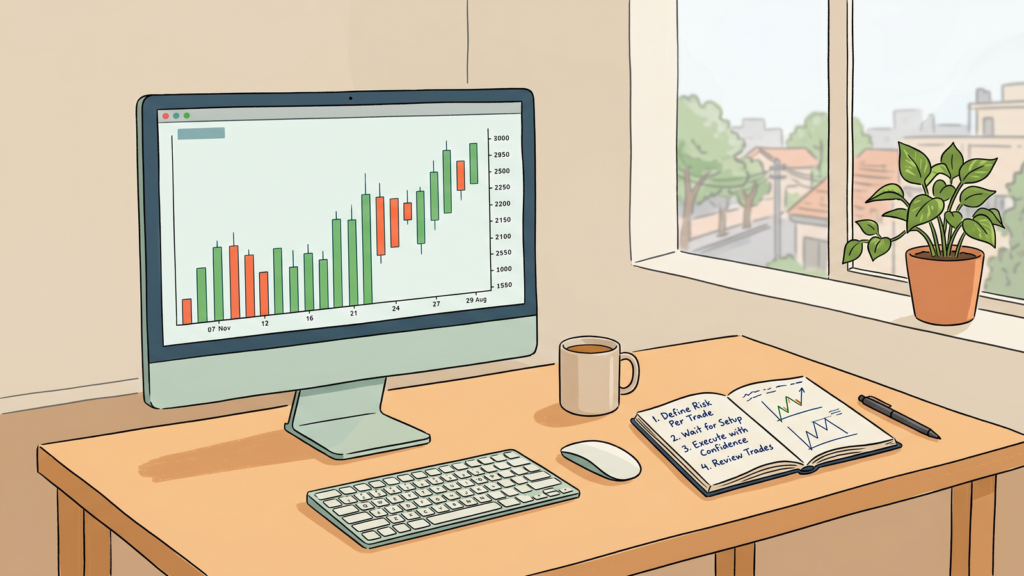
Choosing the Best Platform for Trading in India: A 2026 Guide for Charting and Execution
Most traders spend months learning chart patterns, risk management, and market psychology. However, many eventually realize that even the best strategy can fail if their platform does not perform when it matters most. A reliable setup is often what separates consistent traders from frustrated ones.
Imagine spotting a perfect swing trade, planning your entry carefully, and then watching your broker freeze during a volatile market move. By the time your order executes, the opportunity has disappeared. Situations like these explain why choosing the best platform for trading has become just as important as learning technical analysis.
This is especially true for traders exploring stock market courses in India. While education helps build knowledge, execution determines whether that knowledge translates into actual results. The best platform for trading should support your strategy rather than create additional challenges.
The Myth That Lower Brokerage Automatically Means the Best Platform for Trading
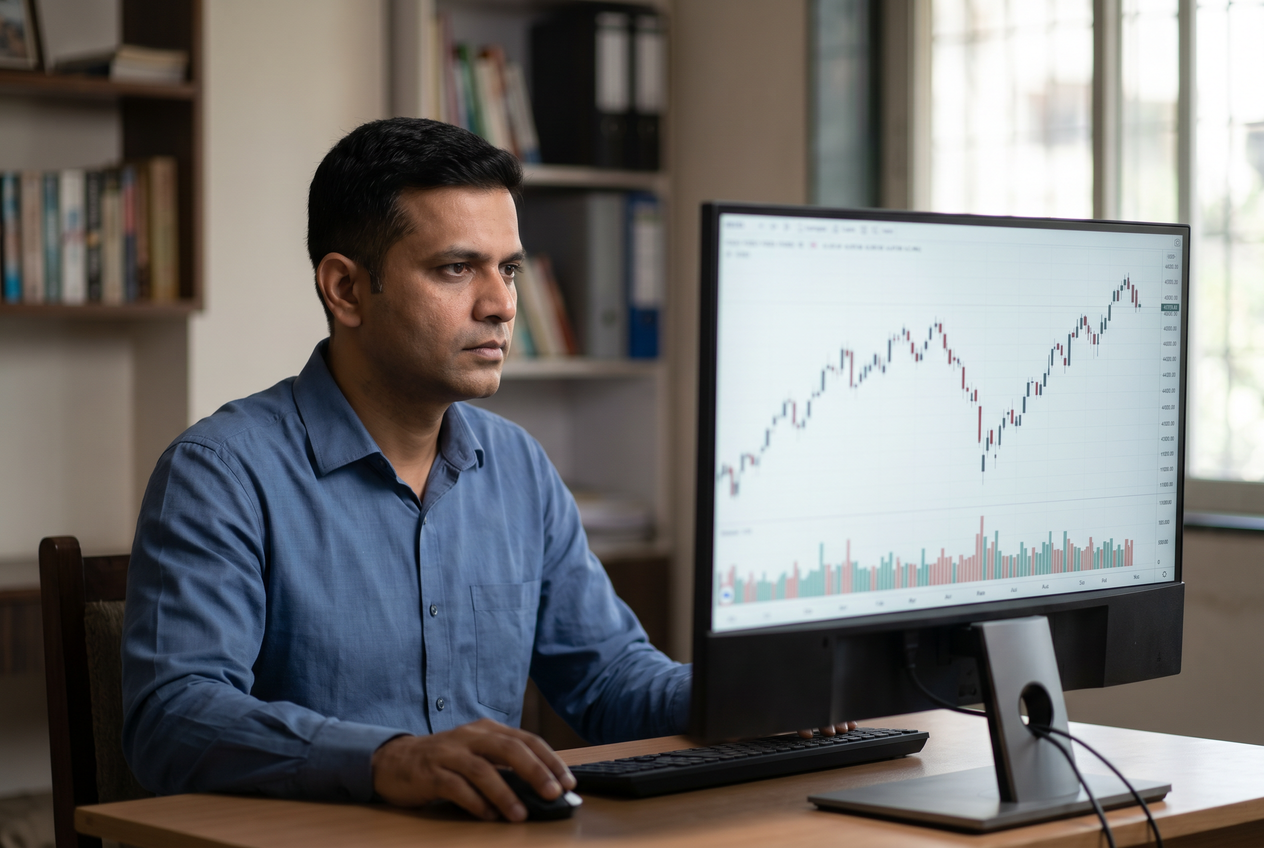
Many beginners assume that the broker with the lowest charges must also be the best platform for trading. Since brokerage costs are easy to compare, traders often focus on pricing while ignoring factors that affect performance far more significantly.
Rahul followed this exact approach. He opened an account with a popular discount broker because it advertised zero delivery charges and low transaction costs. At first, the platform appeared efficient, and he felt confident that he had made a smart financial decision.
The problems started during volatile market sessions. On multiple occasions, the platform became slow during market open. Orders took longer to execute, stop losses were delayed, and profitable setups quickly turned into frustrating losses.
Over time, the losses caused by poor execution exceeded the money he saved through lower brokerage charges. The issue was not his trading strategy. The issue was choosing a broker based only on pricing rather than reliability.
Many traders make this mistake while learning how to start trading in the Indian stock market cycles. They assume cost savings will improve profitability, but execution quality often has a much greater impact on long-term performance.
The reality is simple. The best platform for trading is not always the cheapest option. A platform that executes orders consistently during high-volume sessions can protect capital far more effectively than one that only offers low fees.
The Real Insight: Why Execution Reliability and Charting Quality Matter More
Successful trading depends on consistency. Traders need platforms that allow them to analyze markets accurately, place orders efficiently, and review data without interruptions. This is why experienced traders evaluate platforms differently from beginners.
Execution reliability refers to how consistently a platform processes orders during both normal and volatile market conditions. The best platform for trading should continue performing smoothly even when trading activity increases significantly.
Charting quality is equally important. Accurate charts help traders identify trends, support levels, resistance zones, and potential entry opportunities. Poor charting can distort analysis and lead to unnecessary mistakes.
Priya discovered this while improving her swing trading process. Instead of relying entirely on her broker’s built-in charts, she started using dedicated charting software alongside a stable broker for execution.
Every evening, she reviewed end-of-day data, marked key levels, and prepared her watchlist for the next session. As her process became more structured, she found it easier to identify opportunities and avoid emotional decisions.
Within a few months, her confidence improved significantly. Better charting allowed her to understand stock market cycles more clearly, while reliable execution ensured her trades followed the plan she created.
This is why experienced traders often define the best platform for trading differently from beginners. They prioritize stability, data quality, and execution speed rather than focusing solely on brokerage costs or interface design.
A 5-Step Framework to Choose the Best Platform for Trading
Finding the best platform for trading becomes easier when you follow a structured process. Instead of relying on advertisements or social media recommendations, evaluate each platform using practical criteria.
Step 1: Test Execution During Market Open
The first 15 minutes of trading are usually the most volatile. This period provides an excellent opportunity to assess platform performance under pressure. Create accounts with multiple brokers and monitor how quickly orders are placed, modified, and cancelled during active sessions.
You can also test basic risk-management features, such as position sizing, to evaluate how efficiently the platform supports trade planning. Delays during this period can indicate potential execution issues. Traders who complete this test often identify weaknesses immediately. It provides a realistic picture of how the platform performs when execution matters most.
Step 2: Review Historical Data Quality
Swing traders rely heavily on historical price data. Poor-quality charts can distort analysis and reduce confidence in trading decisions.
Download historical data and compare charts across different platforms. Look for missing candles, incorrect adjustments, or unusual discrepancies that could affect your analysis.
This step is especially useful for traders trying to Learn Stock Trading From Scratch. Reliable data helps build confidence and improves decision-making over time.
Step 3: Evaluate Stability During Volatility
A platform should function consistently during both normal and high-volume market sessions. Technical glitches can create unnecessary stress and interfere with execution.
Monitor platform performance during earnings announcements, major news events, and periods of market volatility. These situations often reveal how reliable a broker truly is. Many traders eventually discover that platform stability is one of the most important characteristics of the best platform for trading.
Step 4: Match Features With Your Strategy
Different trading styles require different tools. Swing traders, positional traders, and intraday traders often have unique requirements.
If your strategy relies heavily on technical analysis, prioritize charting capabilities. If you use automation or custom indicators, ensure the platform supports those features. Students enrolled in a stock market coaching program often find that matching platform features to their strategy simplifies the entire trading process.
| Platform Type | Execution Reliability | Charting Quality | Best For |
|---|---|---|---|
| Discount Brokers | Moderate | Basic | Beginners |
| Full-Service Brokers | High | Good | Active Traders |
| Charting Platforms | N/A | Excellent | Analysis |
| Hybrid Setup | High | Excellent | Swing Trading |
Step 5: Validate With Small Capital
Before allocating significant capital, trade with smaller position sizes for several weeks. This allows you to evaluate the platform in real market conditions without taking excessive risk.
Monitor order execution, platform responsiveness, and overall user experience. Small-scale testing helps identify issues that may not appear during demonstrations.
Many traders who follow this process eventually find the best platform for trading based on experience rather than marketing claims.
How Manas Arora Helps Traders Build Better Systems
Choosing the best platform for trading is only one part of becoming a successful trader. The next step is learning how to use that platform within a structured trading framework.
Manas Arora focuses on helping traders develop rule-based systems built around technical analysis, risk management, and disciplined execution. The goal is to move beyond random decisions and create repeatable processes.
His programs emphasize understanding stock market cycles, identifying high-probability setups, and maintaining consistency across different market conditions. These skills help traders use the best platform for trading more effectively.
Students also learn how to evaluate brokers, interpret chart structures, and integrate analytical tools into their daily workflow. This practical approach helps bridge the gap between theory and execution.
For traders looking to improve both strategy and execution, structured learning can significantly reduce the trial-and-error phase. When combined with the best platform for trading, these skills create a stronger foundation for long-term success.
Explore our courses here!
FAQs
Which Are the Best Trading Courses in India for Traders Who Already Have a Stable Platform?
The best trading courses in India focus on strategy development, risk management, journaling, and trade review rather than platform navigation. Traders with reliable brokers benefit most from programs that improve decision-making and execution discipline.
How Do Stock Market Courses For Beginners Help With Platform Selection?
Stock Market Courses For Beginners teach traders how to evaluate execution reliability, charting quality, and broker stability. Learning these concepts early helps traders identify the best platform for trading before committing significant capital.
Can a Professional Trading Course in India Help During Volatile Markets?
Yes. A Professional Trading Course India focuses on building systems that work across different market conditions. Structured rules and risk management frameworks improve consistency during periods of uncertainty.
What Does a Trading Mentorship Program Offer Beyond Self-Study?
A Trading Mentorship Program provides personalized feedback, trade reviews, and guidance on execution challenges. Many traders improve faster when they receive direct input on their decision-making process.
How Should I Learn Stock Trading From Scratch While Comparing Platforms?
Start with one reliable broker and one charting platform. Focus on understanding market structure, reviewing historical setups, and gradually building experience before expanding your toolkit.
Does Completing an Advanced Stock Market Course Reduce Dependence on Platform Features?
An Advanced Stock Market Course helps traders develop adaptable skills that work across different platforms. While reliable execution remains essential, strong trading principles reduce dependence on specific software features and help traders make the most of the best platform for trading.