
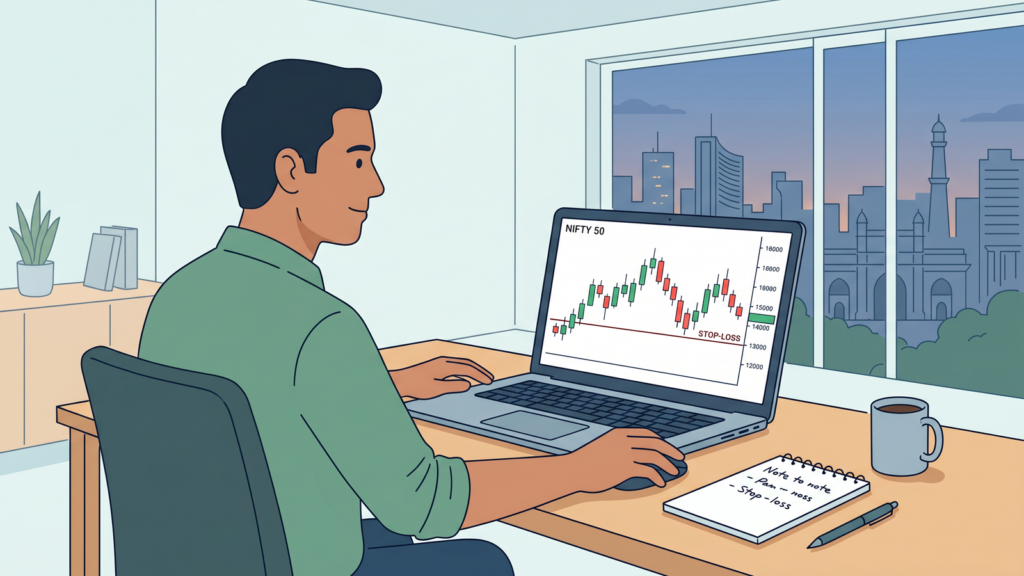
Stop Loss Discipline: Why 90% of Indian Retail Traders Fail in 2026
Most traders do not struggle because they lack market knowledge. They struggle because they fail to manage risk management when trades move against them. A trader can spend months learning chart patterns, indicators, and price action, but without controlling losses, consistent profitability remains difficult.
Even the best setups fail sometimes, and a small loss can quickly become a large one if risk is not managed properly.
The challenge is that following a stop loss sounds simple until real money is involved. When a trade starts moving against you, it becomes tempting to widen the stop, hold on a little longer, or hope for a reversal.
In 2026, with faster execution and easier market access than ever before, developing strong stop loss discipline has become essential for traders who want to protect their capital and stay profitable over the long term.
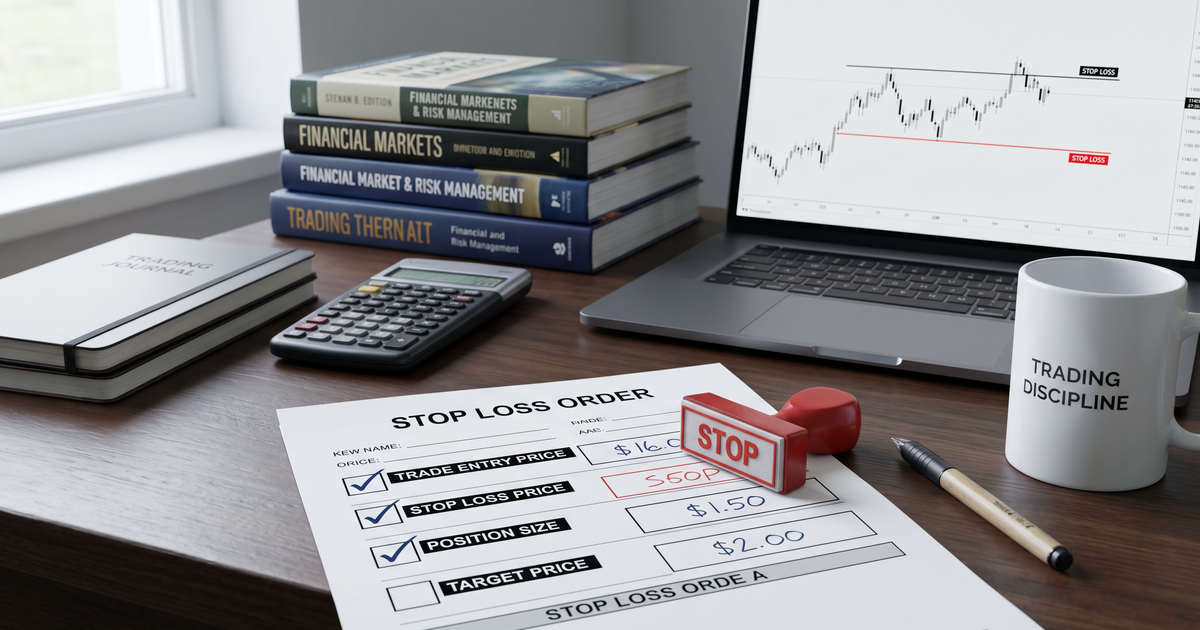
Why Most Traders Lose Money Even With Good Trade Setups
Many retail traders assume that finding better entries will automatically solve their performance problems. They spend hours searching for the perfect indicator combination, refining chart setups, and following multiple market experts.
While better analysis can improve decision-making, it does not protect traders from the consequences of poor risk management. A great setup can still become a losing trade, and without stop loss discipline, a manageable loss can quickly spiral into a significant drawdown.
The real issue is often behavioural rather than technical. Most traders have no problem placing a stop loss when entering a trade. The problem starts when the price approaches that level. Instead of accepting the planned loss, they widen the stop, remove it entirely, or hold the position, hoping for a reversal. This behaviour destroys consistency and makes risk management in trading almost impossible. Over time, repeated violations of stop loss discipline cause more damage than poor market analysis ever could.
A 5-Step Framework To Build Effective Trading Risk Management Strategies
Successful traders understand that risk management is not a single action. It is a repeatable process followed before, during, and after every trade. Building stop loss discipline requires structure, consistency, and the willingness to prioritize capital preservation over short-term emotions.
The following framework helps transform stop loss discipline from an occasional habit into a permanent part of your trading process.
Step 1: Define Your Risk Before You Enter Any Trade
Before entering any position, decide exactly how much capital you are willing to lose if the trade fails. This amount should be based on your account size and overall risk tolerance rather than your confidence in the setup.
When traders define risk first, they eliminate emotional decision-making later. This simple habit strengthens stop loss discipline because the loss has already been accepted before the trade begins.
Step 2: Use Hard Stops Instead Of Mental Stops
Many traders believe they can manually exit when a trade reaches their risk level. In reality, emotions often interfere with execution. Fear, hope, and hesitation cause traders to delay exits and take larger losses. This is one reason why experienced traders and many structured trading courses emphasize the importance of predefined exit rules.
Using hard stop orders removes this decision from the equation. The market executes the exit automatically, making stop loss discipline easier to maintain regardless of emotional pressure.
Step 3: Build Every Trade Around Risk-Reward First
A trade should never be evaluated solely on its potential profit. The relationship between risk and reward matters just as much. Every position should offer a favourable risk-to-reward ratio in trading before capital is committed.
When traders focus on risk-reward first, losses become easier to accept because they understand that a single winning trade can offset multiple small losses. This mindset naturally reinforces stop loss discipline.
Step 4: Review Every Losing Trade Without Judging The Outcome
Many traders review losses emotionally rather than objectively. They focus on the money lost instead of the process followed. This often creates frustration, encourages revenge trading, and leads to poor decision-making in future trades. This challenge is especially common in swing trading, where positions are held for days or weeks, and traders may become emotionally attached to their market views.
Instead, evaluate whether you followed your plan. Did you respect the stop? Did you follow your position sizing strategy? Did you execute according to your rules? Consistent reviews strengthen stop loss discipline far more effectively than obsessing over outcomes.
Step 5: Track The Emotions That Lead To Rule Violations
Most trading mistakes happen because of emotional triggers. Stress, overconfidence, fear of missing out, and frustration often lead traders to ignore their own rules.
Keeping a trading journal helps identify these patterns. Over time, traders begin recognizing the situations where stop loss discipline breaks down and can proactively reduce risk during those periods.
How Proper Position Sizing Changes Everything
Many traders spend a lot of time deciding where to place their stop loss but pay very little attention to position size. This creates a problem because even a well-placed stop becomes difficult to respect when too much capital is tied up in a single trade. When a potential loss feels emotionally or financially significant, traders are far more likely to move their stops, hold losing positions longer than planned, or delay cutting losses in the hope that the market will reverse.
This is why understanding how to calculate position size in trading is just as important as finding the right entry. Proper position sizing ensures that each trade risks only a small portion of your overall capital, making losses easier to accept and manage.
It also strengthens capital management in trading by preventing any single position from causing substantial damage to the account. When combined with stop loss discipline, a sound position sizing strategy helps traders stay objective, control risk consistently, and avoid costly emotional decisions.
Practical Ways To Improve Capital Management In Trading
Strong capital management in trading is built through small habits repeated consistently. The goal is not to avoid losses completely but to ensure that no single mistake can seriously damage your account or confidence.
The following practices can significantly improve both stop loss discipline and overall trading performance:
- Risk a fixed percentage of capital on every trade.
- Reduce position size during volatile market conditions.
- Maintain a detailed trading journal.
- Review rule violations separately from profit and loss.
- Set daily and weekly loss limits.
- Avoid increasing risk after a winning streak.
- Pause trading after consecutive emotional mistakes.
- Focus on process consistency rather than short-term outcomes.
- Track adherence to your stop loss strategy.
- Regularly review your position sizing strategy.
How Manas Arora Helps Traders Build Process-Driven Discipline
Many traders understand the importance of stop loss discipline but struggle to implement it consistently. The gap usually exists because knowledge alone does not change behaviour.
Manas Arora’s educational approach focuses heavily on trading psychology, execution consistency, and practical risk management in trading. Instead of encouraging traders to chase perfect setups, the emphasis remains on building repeatable habits that protect capital over the long term.
Through frameworks focused on trader mindset, risk control, and process-oriented decision-making, traders learn how to strengthen stop loss discipline and develop the consistency required for long-term survival in financial markets.
Explore our courses here!
FAQs on Stop Loss Discipline
Why Do Traders Keep Moving Their Stop Losses?
Most traders move their stops because accepting a loss feels emotionally uncomfortable. The psychology of trading often causes people to prioritize avoiding pain over following a plan. Strong stop loss discipline helps remove this emotional reaction and keeps losses controlled.
How To Calculate Position Size In Trading Correctly?
To calculate position size, first determine the amount of capital you are willing to risk on a trade. Then divide that amount by the distance between your entry price and stop loss. Learning how to calculate position size in trading helps ensure that losses remain manageable.
What Is The Ideal Risk-Reward Ratio In Trading?
There is no universal answer, but many traders prefer a minimum risk-to-reward ratio in trading of 1:2. This means the potential reward is at least twice the potential risk. A favourable ratio allows traders to remain profitable even with modest win rates.
Does Trading Psychology Matter More Than Technical Analysis?
Once a trader reaches a basic level of technical competence, trading psychology often becomes the deciding factor. Many traders know how to identify opportunities but fail because they cannot maintain stop loss discipline and consistent execution.
How Can I Improve Trading Discipline Consistently?
Improving trading discipline requires process-driven habits. Use hard stops, maintain a journal, review mistakes objectively, and follow a consistent position sizing strategy. Discipline improves through repetition rather than motivation.
What Does A Professional Trader’s Mindset Look Like During Drawdowns?
A professional trader’s mindset focuses on process rather than short-term outcomes. During drawdowns, experienced traders continue following their rules, respect stop loss discipline, manage risk carefully, and avoid making emotional decisions in response to temporary setbacks.
Can Stop Loss Discipline Improve Trading Profitability?
Yes. Stop loss discipline does not directly increase profits, but it helps preserve capital by preventing large losses. Traders who consistently control downside risk are better positioned to stay in the market long enough to benefit from profitable opportunities. Over time, disciplined risk management often contributes more to long-term success than finding perfect trade entries.
Should Stop Loss Levels Be Adjusted After Entering A Trade?
Stop loss levels can be adjusted, but only according to a predefined trading plan. For example, traders may move stops to break-even or trail them as a trade moves in their favour. However, widening a stop loss simply to avoid taking a loss usually weakens stop loss discipline and increases overall trading risk.