
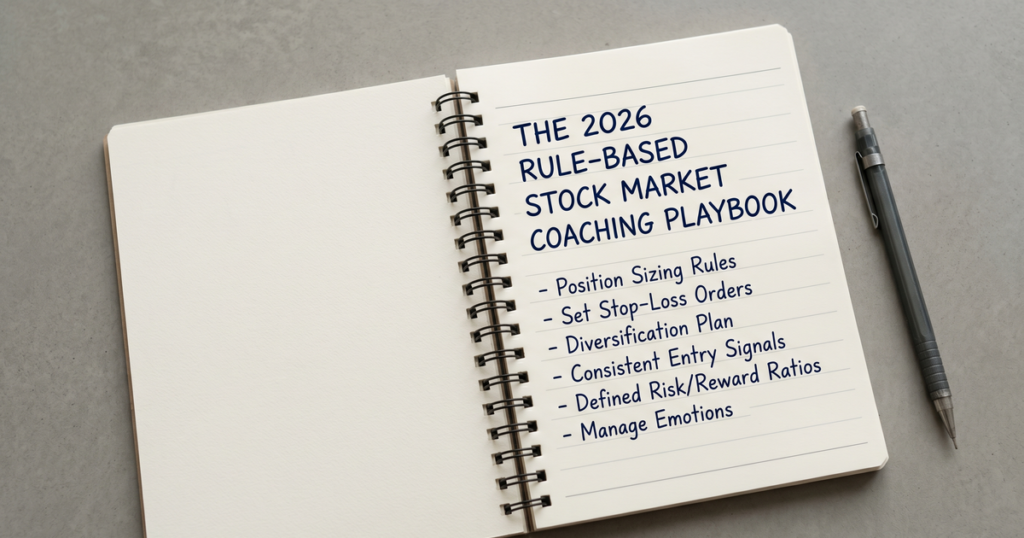
The 2026 Rule-based Stock Market Coaching Playbook
Stock market coaching feels overwhelming when every option sounds promising but the wrong move costs real capital. For retail traders seeking a structured approach, the true challenge is filtering out the noise. Discretionary trading often leads to emotional ruin, especially when competing against the algorithmic systems that dominate today's markets.
Fortunately, a clearer decision lens exists. By shifting to a strict, rule-based system, you can counter the chaotic, gamified approach of modern trading apps. This method replaces gut feelings with objective math, making execution far more practical. Traders consistently praise mentors like Manas Arora for teaching this exact kind of discipline and risk management.
You will learn which market signals matter first, which emotional mistakes to avoid, and how to judge your next trade with confidence. You will leave with a simple, repeatable framework that protects your capital and builds long-term consistency.
What Is Rule-based Stock Market Coaching?
Rule-based stock market coaching is a structured approach that removes guesswork from trading decisions. Most beginners start with discretionary trading, buying or selling based on gut feelings or sudden market movements. In contrast, a rule-based system gives you a strict checklist for exactly when to enter, how much to risk, and when to exit. If you want to stop guessing, browsing a dedicated Store of educational materials is a practical way to find the right program. By following clear rules, you stop reacting and start executing.
Emotional decision-making is the primary reason retail traders lose capital. Imagine buying a stock just because it is rising rapidly, only to watch it reverse the moment you enter. Fear makes you sell at the bottom, and greed makes you buy at the top. Proper stock market mentorship focuses on eliminating these emotional reactions. When you have a rule-based system, you do not panic when a trade goes against you because your exit is already planned. You simply follow the math instead of your mood.
Systematic trading is not a natural talent; it is a highly learnable skill. Anyone can learn how to follow a checklist and manage risk with discipline. A practical stock market course breaks this process down into simple, repeatable steps rather than overwhelming you with complex jargon. You learn to treat trading like a predictable business rather than an exciting casino game. Once you master these rules, long-term consistency naturally follows.
Emotional Trading vs. Systematic Execution: the 2026 Reality

Trading apps have turned the stock market into a chaotic game, encouraging users to buy and sell based on flashing colors and social sentiment. In 2026, algorithmic trading dominates the market, meaning retail traders are competing against machines that never feel fear. When you rely on gut feelings, you are bringing emotion to a math fight. Proper stock market coaching teaches you to act like those machines, executing trades based on strict rules rather than sudden impulses.
Many beginners try to piece together a strategy using free videos, but this scattered approach often leads to expensive mistakes. Watching random tutorials is not the same as following a comprehensive stock trading course that builds your skills step by step. Free content gives you fragments of information, leaving you to guess how to manage risk. A dedicated trading mentorship program removes this confusion by providing a clear framework before the market even opens.
Choosing between emotional guesswork and systematic execution comes down to deciding how much you value your capital. Discretionary traders constantly second-guess their entries, while systematic traders simply follow their predefined checklist. To build consistency, you must understand the stark trade-offs between these two paths:
- Decision making: Emotional traders panic during price drops; systematic traders execute a pre-planned stop-loss.
- Learning path: Free videos offer disconnected tips; structured mentorship provides a repeatable daily routine.
- Market edge: Gamified apps encourage overtrading; rule-based systems focus on calculated risk.
The 5 Pillars of a Profitable Trading System

Building reliable income requires more than guessing which way a chart will move. When you learn stock trading from scratch, you quickly realize that survival matters more than quick profits. A solid framework acts like a safety net when the market behaves unpredictably.
Finding the right stock market course comes down to whether the mentor teaches a complete system or just random tricks. A true stock market training program focuses on building a repeatable process you can execute without hesitation. This removes the anxiety of staring at a screen wondering what to do next.
To achieve consistency, you need a foundation built on strict rules rather than gut feelings. Every successful trader relies on core principles that dictate how they interact with the market. These five pillars form the exact framework needed to protect your capital and grow your account:
- Strict risk management: Your primary job is capital preservation, meaning you must know exactly how much you will lose before entering a trade.
- Objective entry and exit rules: You need clear conditions for buying and selling so you never guess when to take action.
- Position sizing and leverage control: Keeping trade sizes consistent prevents a single bad decision from wiping out weeks of progress.
- Trade journaling and review: Tracking past trades helps you spot mistakes and stop repeating the same costly errors.
- Psychological discipline: Following your rules when you feel scared or greedy is the key to surviving algorithmic markets.
How to Start Your Rule-based Journey Today
Transitioning to actual execution requires a hard reset on your daily habits. The first step to building a profitable system is to stop taking random trades based on news alerts or social media tips. Imagine trying to bake a cake by throwing random ingredients into a bowl whenever someone shouts a suggestion—you will end up with a mess. Instead, you must clear the noise and commit to a structured approach where every decision follows a strict rule.
Once you stop gambling on random advice, your next move is to define one core strategy. Many beginners jump between day trading, options, and investing in the same week, which only leads to confusion. A smarter approach is to pick a straightforward method, like swing trading, where you hold positions for a few days to capture clear trends. By focusing on just one setup, you can track what works, fix your mistakes, and build the confidence needed to grow your account.
Learning to execute this strategy flawlessly is easier when you learn from someone who trades live and teaches proven systems. You do not need to figure out the markets alone when a reliable online trading course provides the exact blueprint. Proper stock market coaching means finding a mentor who prioritizes risk management over flashy promises. If you are ready to stop guessing and want a professional trading course for real results, explore structured learning paths that prioritize discipline over luck.
Why Manas Arora's Mentorship Focuses on Discipline
Many people enter the market hoping to double their money quickly, but real survival requires strict discipline. Most stock market courses for beginners sell the dream of fast riches instead of teaching capital protection. Manas Arora takes a different approach by focusing entirely on rule-based execution. Instead of guessing market direction, you follow strict rules that dictate your entries and exits. This shift from emotional gambling to systematic trading builds true consistency.
Building this mechanical discipline is the core focus of the Fast & Fortunate Trading Mentorship Program. Finding the best stock trading course for beginners means finding a system that stops impulsive mistakes. You learn to manage risk on every trade so one bad day never wipes out your account. Think of it like driving a car with a speed governor: the rules prevent you from crashing when the market gets volatile.
Learning theory is only the first step, which is why ongoing guidance is crucial. A proper stock market course with mentorship helps you navigate live market conditions. You can follow this daily market context on the Manas Arora Twitter feed, where real-time updates keep you grounded. Additionally, you can explore deeper breakdowns of these concepts through his YouTube insights.
- Focus on protecting your capital before trying to multiply it.
- Follow strict rules to eliminate emotional trading decisions.
- Use daily market updates to stay aligned with your plan.
Quick Summary: What Matters Most
Relying on your gut feeling to buy or sell stocks usually ends in frustration and lost capital. When you compare a structured stock market course to free YouTube learning, the biggest difference is always discipline. Free videos often give you random tips, leading to emotional decisions where you hold losers too long and sell winners too early. To survive in 2026, you need a strict system that removes guesswork entirely. An advanced stock market course teaches you how to build these exact rules so you never have to wonder what to do next.
Manas Arora focuses entirely on this mechanical approach, proving that rule-based trading coaching is the only sustainable path for retail investors. Whether you are looking for a reliable swing trading course or just want to stop making emotional errors, success comes down to following a clear trading discipline playbook. Here is a quick summary of what actually matters when you sit down to trade:
- Define your entry trigger: Never buy a stock just because it looks cheap; wait for a specific price action setup.
- Set a hard stop-loss: Decide exactly where you will exit if the trade goes wrong before you even place the order.
- Plan your profit target: Know exactly when to take money off the table so greed does not turn a winning trade into a losing one.
- Control your position size: Only risk a tiny percentage of your total capital on any single trade to protect your account from sudden drops.
FAQ
How Does Rule-based Stock Market Coaching Differ From Traditional Trading Courses?
Traditional courses often focus on theoretical concepts and discretionary setups, leaving room for guesswork. Rule-based stock market coaching provides strict, objective parameters for entries, exits, and position sizing. This structured approach eliminates ambiguity, ensuring you execute trades based on data rather than intuition.
Why Is Discretionary Trading Considered Ineffective for Retail Traders in 2026?
As algorithmic trading dominates the markets in 2026, retail traders relying on gut feelings cannot compete with high-speed, data-driven systems. Discretionary trading inevitably leads to emotional decision-making, revenge trading, and inconsistent results. A strict, rule-based approach is the only sustainable way to survive and achieve long-term profitability.
Can a Rule-based System Completely Eliminate Emotional Trading Errors?
While no system can entirely erase human emotion, a rule-based framework drastically reduces its impact. By pre-defining your exact entry triggers, stop-losses, and profit targets, you remove the need to make high-pressure decisions during live market hours. You simply execute the plan, which builds discipline over time.
What Specific Risk Management Techniques Does Manas Arora Teach?
Manas Arora prioritizes capital preservation above all else. His coaching emphasizes strict position sizing, predefined stop-losses, and maintaining a favorable risk-to-reward ratio on every trade. Reddit users consistently highlight his focus on discipline, noting that his frameworks prevent the catastrophic losses typical of emotional trading.
How Do Rule-based Frameworks Compare to Gamified Trading Apps Like Stockgro?
Gamified apps often encourage a chaotic, entertainment-driven approach to the markets, treating trading like a game. Rule-based frameworks directly counter this by treating trading as a serious, disciplined business. Instead of chasing leaderboards or relying on social sentiment, you rely on tested, objective market parameters.
Do I Need Programming Skills to Implement Rule-based Trading Strategies?
No programming skills are required. Rule-based trading simply means following a strict set of objective criteria before taking a trade. While institutional algorithms use code, retail traders can execute rule-based systems manually by strictly adhering to their predefined technical setups, risk limits, and daily trading plans.
How Long Does It Take to Build Consistency Using a Rule-based Trading Framework?
Building consistency depends entirely on your ability to follow the rules without deviation. Most traders begin seeing a shift in their performance within a few months of strict adherence. The initial learning curve involves unlearning emotional habits and trusting the system, which requires patience and rigorous forward-testing.
Next Steps
Join the Fast & Fortunate Trading Mentorship Program to build your rule-based system. Use the principles outlined above to pressure-test your current strategy, clarify your trade-offs, and move toward your next trade with more confidence and zero guesswork.