
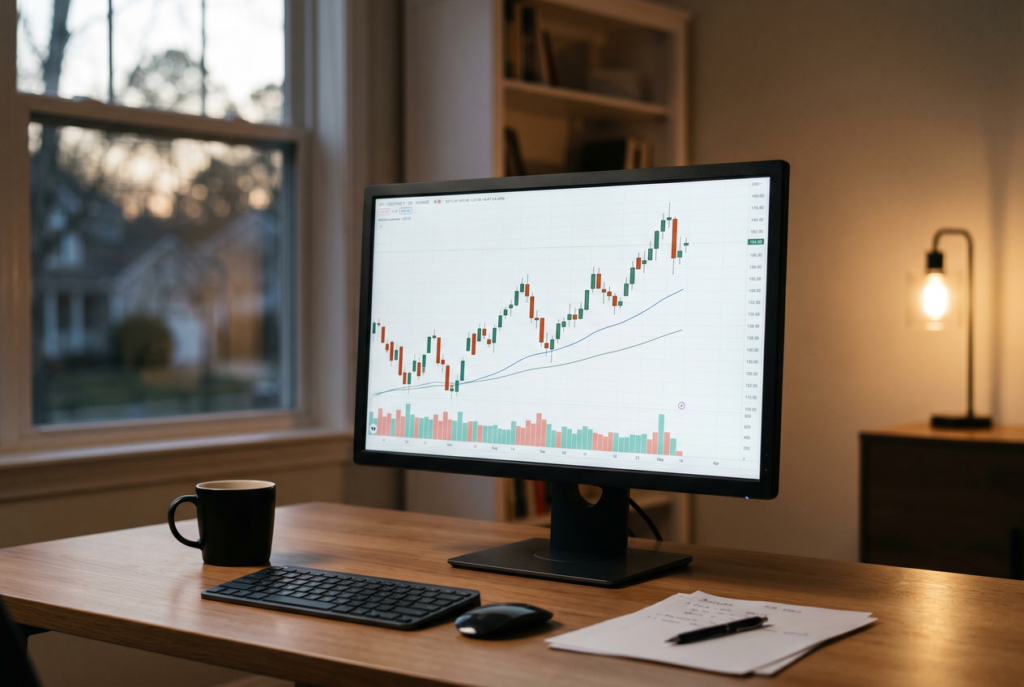
A Stock Market Training Program Built for Swing Traders
Finding a stock market training program feels overwhelming when the wrong choice costs time and momentum. For working professionals who want to trade but cannot monitor the markets all day, the real challenge is filtering out the noise. Most courses push stressful day trading strategies that demand constant screen time, making them impossible to balance with a full-time career.
Fortunately, a more sustainable path exists. When you shift your focus to swing trading, the process becomes manageable. This approach relies on end-of-day analysis rather than constant intraday monitoring. By learning from a full-time swing trader like Manas Arora, you gain practical, lived experience tailored specifically for professionals who analyze charts after work.
By the end of this breakdown, you will know which market signals matter, which mistakes to avoid, and how to evaluate your next steps with confidence. You will leave with a straightforward framework for building a secondary income stream without sacrificing your primary career.
What Is a Swing-focused Stock Market Training Program?
A swing-focused training program teaches you how to capture short-to-medium-term price moves without staring at a screen all day. Unlike generic courses that push stressful intraday scalping, a swing trading curriculum is built around holding positions for a few days to a few weeks. This approach allows you to buy a stock, let the market do the heavy lifting, and sell when your price target is met. For working professionals, this means you can maintain your primary career while building a secondary income stream. You can explore this stress-free philosophy directly through the Store, where the focus remains entirely on practical price action.
The foundation of this strategy relies on end-of-day analysis. Instead of reacting to every minor price fluctuation during working hours, you review the charts after the market closes. For example, you might spend thirty minutes each evening scanning for specific price patterns and setting your orders for the next morning. This simple routine removes the emotional panic of live trading and replaces it with calm, calculated execution. An advanced course dedicated to swing trading will show you exactly how to filter out the daily noise and focus only on the closing price. By mastering this routine, you protect your capital and your peace of mind.
Swing Trading vs. Intraday Scalping: the Professional's Choice
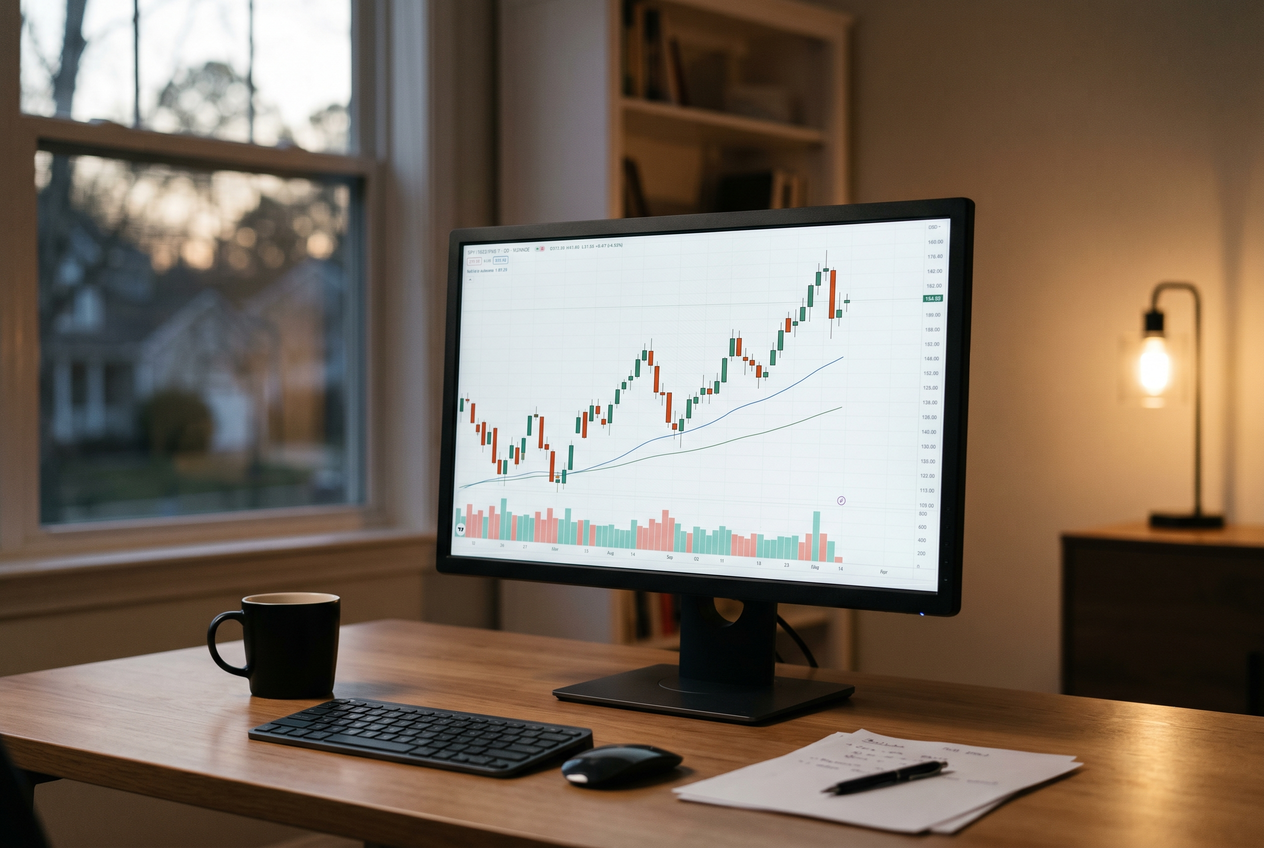
Choosing between trading styles comes down to how much time you can realistically spend looking at a screen. Intraday scalping requires you to monitor every minor price fluctuation, turning your desk into a high-stress environment where a quick coffee break can cost you money. When comparing these approaches visually, the difference is immediate: the scalper is glued to flashing ticks, while the swing trader calmly reviews daily candles in the evening. Standard trading courses often push day trading, but professionals rarely have the luxury of ignoring their jobs to watch a one-minute chart.
Stepping away from intraday noise protects your peace of mind. When you hold positions for days, you avoid the emotional whiplash of reacting to sudden price spikes. This is why finding a training program that aligns with your schedule is critical. A dedicated mentorship focused on swing trading teaches you to trade the larger trend. Before committing, consider the explicit trade-offs to see what fits your life:
- Screen time: Scalping demands constant attention, while swing trading requires only end-of-day analysis.
- Stress levels: Intraday trading forces split-second decisions, whereas swing trading gives you hours to plan.
- Career impact: Day trading competes with your job, but swing trading coexists with it.
5 Essential Elements of a Profitable Trading Mentorship

Finding the right guidance is critical when you have limited time to study the markets. A high-quality trading mentorship focuses on practical application rather than theoretical concepts. Many beginners search for the best courses, only to end up with pre-recorded videos explaining historical charts where outcomes are already known. Instead, working professionals need an online technical analysis course that teaches them how to read live price action. When balancing a full-time job, you cannot afford strategies that only work in perfect, simulated conditions.
To build a secondary income stream, your education must bridge the gap between knowing a pattern and executing a trade. This means prioritizing strict risk management over promises of quick wealth. For example, if a setup fails, you need a predefined exit plan that protects your capital automatically. The most effective programs strip away the noise and focus entirely on a few core pillars. Before committing your time, ensure your chosen program includes these five non-negotiable elements:
- Live market examples instead of historical hindsight.
- Strict risk management frameworks.
- Clear entry and exit rules based on price action.
- A supportive community of like-minded traders.
- Direct access to the mentor for real-time feedback.
Inside the Faf Trading Mentorship Program
The Fast and Fortunate (FAF) Bootcamp is a training program designed specifically for professionals who analyze charts after work. In volatile market environments, relying on lagging indicators often leads to late entries. Instead of teaching complex theories, this online course focuses entirely on reading raw price movements. You learn to identify high-probability swing setups using daily charts, meaning you only check your portfolio once a day. This strips away the noise of intraday volatility, allowing you to make calm decisions without staring at a screen during office hours.
Recognized as a highly practical price action course, the curriculum breaks down professional strategies into manageable steps. You learn to manage risk strictly, spot institutional buying zones, and trail stop losses to protect profits. To see these concepts applied in real time, follow Manas Arora for daily market insights and live proof of how these setups perform. If you want to explore the complete syllabus and see if this approach fits your schedule, review the full course details directly in the Store.
- End-of-day scanning: Find setups using closing prices instead of live data.
- Position sizing: Ensure a single losing trade never damages your core capital.
- Clear execution: Identify entry triggers and exit targets based purely on price behavior.
Quick Summary: What Matters Most
You do not need to stare at a screen all day to be a profitable trader. Many beginner courses push intense day trading strategies that simply do not work for people with full-time jobs. Instead, a dedicated swing trading program fits perfectly into a busy professional's life while delivering active returns. By focusing on end-of-day analysis, you can review charts after work and place your orders for the next morning. This approach removes the stress of watching every minor price fluctuation during your lunch break.
Finding the right course for working professionals means looking for education that respects your time constraints. If you want to learn trading from scratch, you need a system built around your existing schedule rather than fighting against it. Quality coaching should focus on practical steps that let you trade effectively without quitting your day job. Here is what matters most when building a sustainable trading routine:
- Focus on daily charts: Analyze price action once the market closes, avoiding the noise of intraday movements.
- Prioritize risk management: Set clear stop-loss orders before entering any trade so your capital remains protected while you are at work.
- Seek lived experience: Choose mentors who actively swing trade their own capital rather than theorists who only teach.
FAQ
What Makes This Stock Market Training Program Different From Standard Day Trading Courses?
Most courses push high-stress intraday scalping that requires constant screen time. This training program is specifically optimized for swing trading. It focuses on practical price action and strict risk management, allowing you to capture broader market moves without quitting your day job.
How Much Time Do I Need to Dedicate Daily to Execute These Swing Trading Strategies?
You only need to dedicate time for end-of-day analysis. Because the methodology avoids intraday monitoring, you can review charts, adjust your stop losses, and plan your entries after market hours. This makes it highly sustainable for busy professionals seeking a secondary income stream.
Does the Faf Mentorship Cover Risk Management for Smaller Account Sizes?
Yes. Strict risk management is a core pillar of the curriculum, prioritizing capital preservation over theoretical fluff. The program teaches you how to size your positions correctly and manage drawdowns, ensuring that even smaller accounts can grow steadily without taking on catastrophic risk.
Can I Apply These Swing Trading Concepts If I Have a Demanding 9-to-5 Job?
Absolutely. The entire framework is built around the constraints of working professionals. By relying on end-of-day analysis rather than live market execution, you can comfortably manage your portfolio in the evenings. It is designed to complement your career, not compete with it.
Are the Strategies Taught by Manas Arora Based on Theoretical Models or Live Market Experience?
The curriculum is entirely based on lived experience. Manas Arora is a full-time swing trader who actively trades the strategies he teaches. You learn practical, battle-tested price action techniques rather than outdated academic theories that fail to hold up in live market conditions.
Do I Need Expensive Charting Software to Perform the Required End-of-day Analysis?
No, you do not need expensive or complex software. The program focuses on clean, practical price action that can be analyzed using standard, widely available charting platforms. The emphasis is on reading market structure and managing risk effectively, rather than relying on costly proprietary indicators.
Next Step
Join the FAF Trading Mentorship Program. Use the points above to pressure-test fit, clarify trade-offs, and move toward a next step with more confidence and less guesswork.