

The 90-day Roadmap: What to Do After Finishing Your Stock Market Course
You just finished the final video of your stock market course, but staring at a live trading screen feels completely different. Many beginners freeze or quickly lose their capital because knowing the theory does not automatically translate to pressing the buy button with real money.
This gap between learning and doing is completely normal. Finishing your education is just the starting line, and surviving the fast-paced markets requires a strict transition plan rather than just memorizing more chart patterns.
This 90-day roadmap will show you exactly how to move from paper trading to live execution without blowing up your account. You will learn how to manage risk, build a reliable trading journal, and protect your capital while developing real confidence.
The Reality of Stock Market Courses
A stock market course teaches the mechanics of buying equities, reading charts, and managing risk. These lessons provide the essential theory to understand market movements. However, beginners often assume that memorizing patterns guarantees profits. Live markets carry real emotional weight that a static curriculum cannot replicate. To bridge the gap between theory and execution, you need a practical roadmap that moves beyond the basics found in a typical educational Store.
The real challenge begins the moment you face a live trading screen. Instead of jumping into heavy position sizes, you must transition slowly from paper trading to live execution. Because theory cannot teach you how to handle the stress of a sudden market reversal, joining a trading mentorship program offers the ongoing guidance required for long-term profitability. Manas Arora focuses on these exact actionable steps to help you survive.
The Post-course Trap: Defining the Gap Between Theory and Live Markets
The execution gap is the harsh reality separating a known chart pattern from clicking the buy button under pressure. When you finish a standard stock trading course, you understand support and resistance on a static screen. However, theoretical lessons rarely prepare you for live price action. You might spot a perfect setup, but hesitation creeps in as the numbers flash.
Trading with real capital introduces a psychological weight that paper trading cannot replicate. Imagine practicing a speech alone versus delivering it to a massive audience. The material is the same, but the stakes change your physical reaction. When your own money is on the line, fear of loss often overrides logical strategy. To survive this transition, you must recognize that knowing the theory is entirely different from executing it.
Paper Trading vs. Live Execution: Making the Right Decision
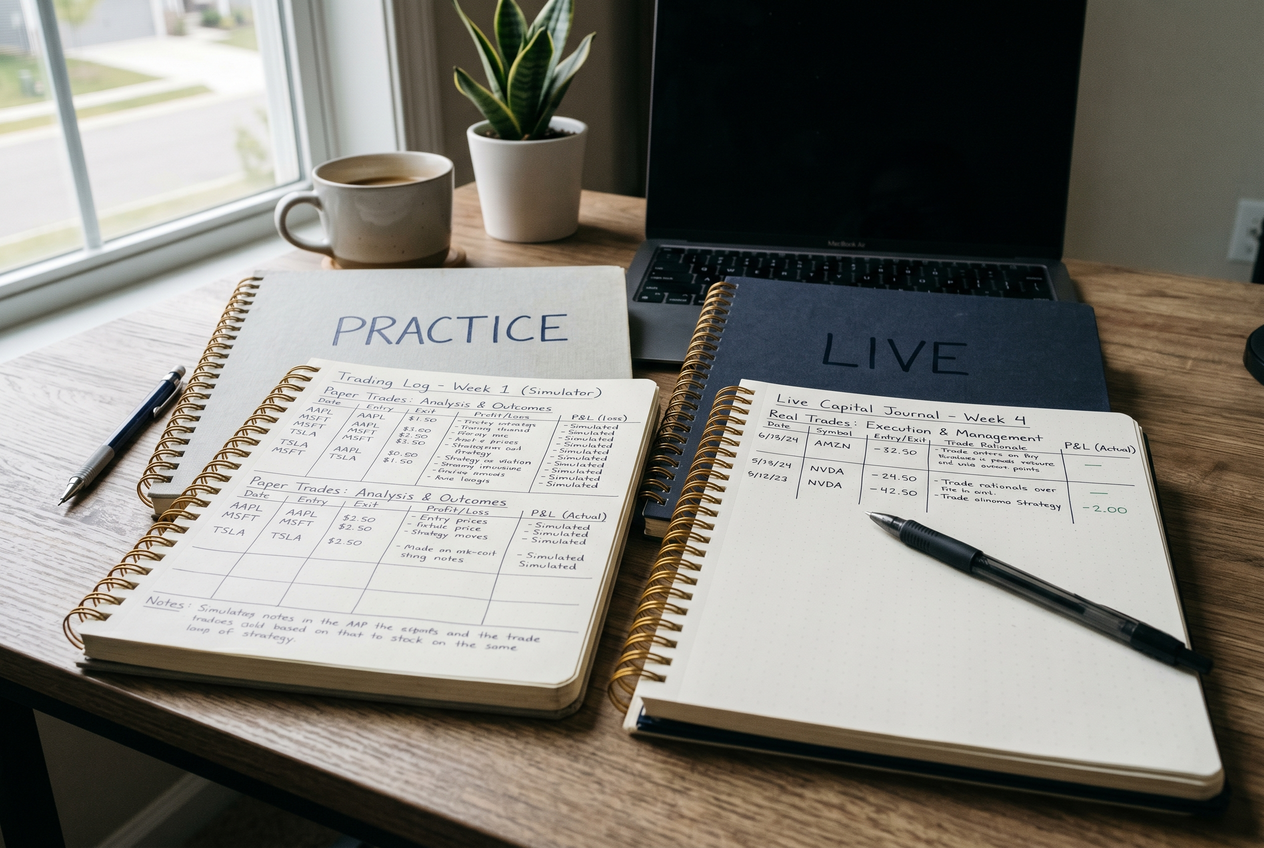
Paper trading is an excellent tool for learning how to navigate a broker's platform without losing money. Practicing with fake money helps you test new strategies. However, simulated trading completely removes the emotional weight of risking real capital. You might hold a losing trade calmly on a simulator, but panic when actual savings are on the line.
To bridge this gap safely, transition to live execution using micro-position sizing. Instead of trading your entire account, risk an amount so small that a loss feels like buying a cup of coffee. This allows you to experience real psychological pressure while protecting your portfolio. Proper coaching emphasizes that this phase is about building emotional discipline, not making massive profits. Before moving to live execution, ensure you meet these criteria:
- Platform familiarity: You can execute orders without technical errors.
- Rule adherence: You have logged simulated trades that strictly follow your risk rules.
- Micro-sizing: You are ready to trade just one or two shares to test your emotional reactions.
The 90-day Execution Roadmap: Your Step-by-step Checklist
Transitioning to live execution requires a strict timeline. Many new traders rush into the market expecting immediate profits, but moving too fast often results in a blown account. You must balance the desire to scale your capital against the strict need for risk management. Follow this specific execution checklist to bridge the gap between classroom theory and live market reality:
- Days 1-30: System building. Define your edge and backtest strictly. Sacrifice immediate live action to verify your strategy on past data.
- Days 31-60: Micro-position trading. Execute trades with the smallest possible size. Trade potential profits for the safety of managing live emotions.
- Days 61-90: Gradual scaling. Slowly increase your position size. Exercise patience and follow risk rules instead of chasing larger setups.
Essential Tools for Survival: Trading Journals and Risk Rules
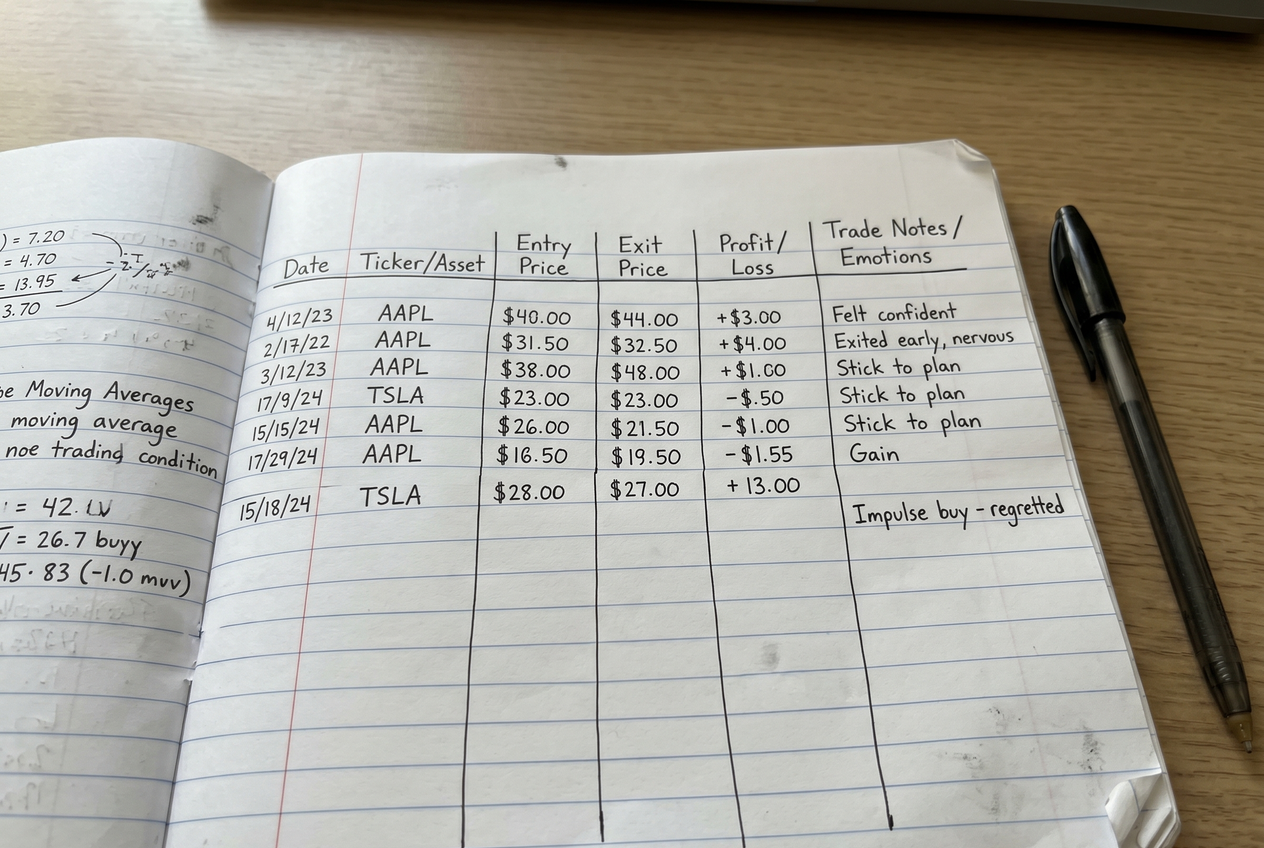
A trading journal is your most valuable asset during the first 90 days of live execution. While courses teach you how to identify setups, a journal forces you to record why you actually took the trade. For example, if you constantly buy breakouts too early because of anxiety, your journal highlights this recurring mistake in plain text.
Protecting your mental capital requires setting a non-negotiable daily loss limit before the market opens. A strict cutoff prevents one bad morning from ruining your week. Once you hit that predetermined loss number, you must close your laptop and walk away. To see exactly how these live execution strategies look under real market pressure, watch the breakdown in YouTube video PBEyuc9jjMU for visual proof of managing risk.
Why Continuous Mentorship Beats Going Solo
Retail trading is an isolating profession when you sit alone staring at a screen. You might finish a technical analysis course and feel prepared, but the live market moves faster than historical chart examples. A static curriculum teaches you the rules, but it cannot manage your emotions during a sudden market drop. Without a guide, new traders often abandon their strategies during a losing streak.
Continuous guidance acts as your safety net. The FAF Trading Mentorship Program provides the live market hand-holding needed to survive these critical early months. Instead of guessing, you get real-time context on price action. You can explore the core philosophy on the Manas Arora home page, or visit the Store to find an advanced stock market course that fits your skill level. To stay connected with daily market realities, following IManasArora ensures you never have to navigate volatile sessions entirely on your own.
Quick Summary: What Matters Most
Figuring out what to do after learning to trade is often harder than the coursework itself. The transition to live trading requires a strict 90-day execution plan to protect your capital. Without a structured timeline, new traders often abandon their strategies and blow up their accounts.
Proper mentorship during this phase ensures you stick to your rules instead of trading on emotion. To survive your first 90 days, follow these core execution steps:
- Trade in a simulator for the first 30 days to test your strategy.
- Move to micro-position sizing in month two, risking a tiny fraction of your account.
- Log every entry and exit in a journal to track your performance.
- Review your weekly data to identify mistakes before scaling up.
Related Search Angles
Readers evaluating this topic also tend to search for:
- best stock market course in India
- online trading course
- stock market courses for beginners
- stock market mentorship
- stock market training program
- stock market coaching
- best stock trading course for beginners in India
- swing trading course India
- technical analysis course online India
- price action trading course India
- learn stock trading from scratch
- professional trading course India
- stock market course with mentorship
- best stock market course vs free YouTube learning
- is stock market course worth it
- stock trading course review India
FAQ
How Long Should I Paper Trade After Finishing a Stock Market Course?
You should paper trade for at least 30 days after completing your stock market course. This period allows you to test your strategies and build execution muscle without financial risk. Once you achieve consistent profitability and strict rule adherence on paper, you can safely transition to a small live account.
What Is the Biggest Mistake New Traders Make When Moving to Live Markets?
The most common mistake is scaling up position sizes too quickly. New traders often abandon their risk management rules the moment real money is on the line. To survive, you must start with minimal capital, focusing entirely on process execution and emotional control rather than immediate profits.
How Do I Build an Effective Trading Journal for My First 90 Days?
A strong trading journal tracks more than just entry and exit prices. You must record your emotional state, the specific setup you traded, and whether you followed your predefined rules. Reviewing this data weekly helps identify behavioral patterns and prevents you from repeating costly execution errors.
Why Is Ongoing Mentorship Necessary If I Already Know the Chart Patterns?
Chart patterns are theoretical, but live markets are dynamic and emotionally taxing. Ongoing mentorship provides real-time feedback and accountability when your psychology falters. A mentor helps you navigate drawdowns, refine your execution, and prevents you from abandoning your system during inevitable losing streaks.
How Much Capital Should I Use During My First Month of Live Trading?
Deploy only an amount you are entirely comfortable losing, often referred to as tuition money. For most beginners, this means trading with the smallest possible position size. Your primary goal in the first 90 days is survival and data collection, not generating a full-time income.
How Do I Know When I Am Ready to Increase My Position Sizing?
You are ready to scale up only after logging at least 20 consecutive trades where you flawlessly executed your trading plan. Profitability alone is a flawed metric; you must prove strict adherence to your stop-loss and risk management rules before exposing more capital to the market.
Next Steps
Join the FAF Trading Mentorship Program to pressure-test your strategy, clarify trade-offs, and move toward live execution with more confidence and less guesswork.