
Price Action vs Indicator-based Trading: Which Strategy Actually Works in Indian Markets?
Finding the right price action trading course in India can feel overwhelming when every strategy promises massive returns, yet leaves you staring at cluttered charts. For traders navigating volatile markets, relying on lagging indicators often leads to late entries, conflicting signals, and mounting frustration during high-momentum breakouts. This guide explains price action trading course India clearly and shows what to evaluate next.
The reality is that mathematical overlays like the RSI and MACD are inherently delayed, calculating historical data rather than real-time institutional order flow. Stripping away this visual noise to focus on naked price action—reading raw candlesticks and volume—provides a much clearer, faster lens for decision-making.
By the end of this breakdown, you will understand exactly why traditional indicators fail during strong trends and how to transition to a cleaner, more responsive trading methodology. You will learn to identify critical support zones, track smart money, and execute trades with greater confidence and tighter risk management.
The Problem With Cluttered Charts: Defining Indicator-based Trading
When beginners first attempt to learn stock trading, they often gravitate toward indicator-based strategies because mathematical overlays offer an illusion of safety. Tools like the RSI, MACD, and Bollinger Bands feel like a definitive roadmap for navigating volatile markets. This reliance on visual crutches is exactly why many introductory courses focus heavily on teaching these traditional setups. However, as traders progress beyond the basics and explore advanced resources in a dedicated Store, they quickly realize that these mathematical overlays fail during high-momentum breakouts.
The core problem with these popular tools is that they are inherently lagging. They calculate values based entirely on historical data rather than real-time institutional order flow. By the time an indicator finally flashes a buy signal, the actual price move has already happened, forcing late entries with terrible risk-to-reward ratios. In fast-paced Indian markets, relying on delayed signals leads to constant frustration. A proper trading mentorship program emphasizes stripping away the clutter to focus on the only metric that never lags: price itself.
What Is Naked Price Action Trading?
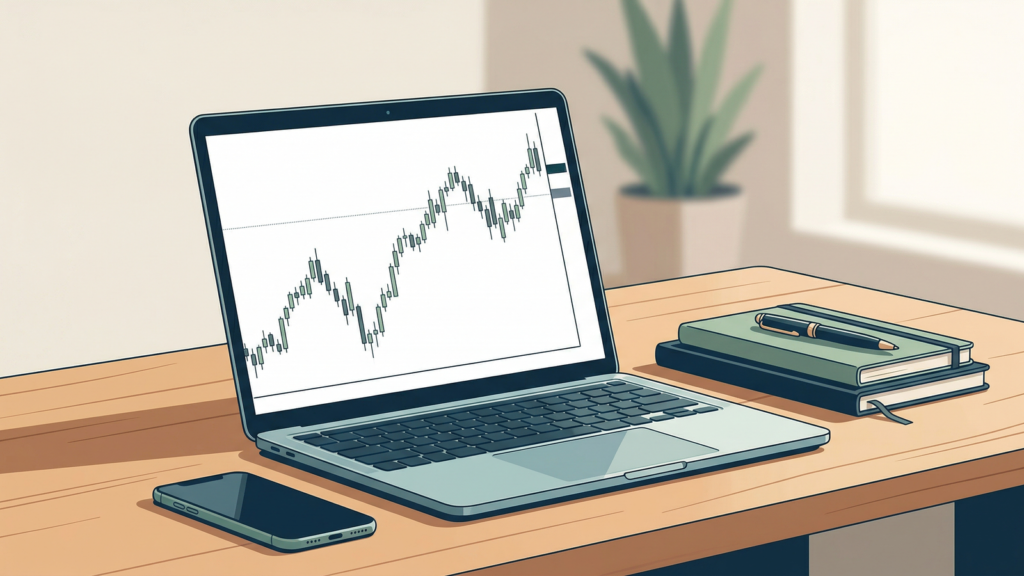
Naked price action trading is the practice of analyzing raw market data—specifically candlesticks and volume—without relying on mathematical overlays. Instead of waiting for a moving average crossover, traders read the immediate footprint of buyers and sellers directly on the chart. This approach forms the foundation of any rigorous stock market training program, teaching you to interpret the size, shape, and placement of a candle as a real-time reflection of market psychology.
Mastering this methodology allows you to identify critical support and resistance zones using only historical price levels. When evaluating a price action trading course in India, the primary objective should be learning to track institutional order flow as it happens. Large financial entities cannot hide their massive volume, and naked charts expose their accumulation phases long before an indicator registers the shift. High-quality coaching emphasizes that price is the only leading variable, giving you the conviction to enter trades at optimal pivot points.
Price Action vs Indicators: the Ultimate Comparison for Indian Markets
Choosing between raw charts and mathematical overlays fundamentally changes how quickly you react to institutional order flow. Indicators inherently lag because they calculate past data, meaning you often enter a strong trending market late and exit after momentum shifts. Conversely, reading raw candlesticks allows for immediate execution. This speed advantage is why traders seeking the best stock market education eventually abandon cluttered setups.
The psychological toll of conflicting signals is equally significant for retail traders. When moving averages suggest a buy but oscillators scream overbought, the resulting hesitation causes missed opportunities. Quality coaching emphasizes that removing mathematical noise reduces decision fatigue. Consider the distinct trade-offs between these two methodologies:
- Execution speed: Raw charts provide real-time entry triggers, while indicators require waiting for lagging confirmations.
- Market adaptability: Naked charts clearly define sideways ranges, whereas oscillators frequently generate false signals during choppy consolidation.
- Psychological clarity: Trading without overlays eliminates the paralysis of contradictory signals.
Why Rsi and Macd Fail During High-momentum Breakouts
Mathematical oscillators are designed for ranging environments, making them dangerously misleading during aggressive breakouts. When the Nifty or Bank Nifty enters a high-momentum phase, tools like the RSI and MACD quickly flash “overbought” signals and stay pinned there for weeks. Traders relying on these lagging metrics often exit winning positions prematurely or attempt to short a raging bull market. This trap highlights why taking a structured online trading course is vital, as beginners mistakenly trust mathematical overlays instead of raw price action.
Recent Bank Nifty rallies perfectly illustrate this failure, where consecutive gap-ups and sustained buying pressure completely ignored bearish MACD divergences. Navigating these aggressive trends requires a deep understanding of candlestick context. Instead of blindly selling because an indicator crossed a threshold, professional traders read the naked chart to stay aligned with the dominant trend.
5 Reasons Naked Chart Reading Is the Superior Strategy
Stripping away mathematical overlays forces you to confront the raw reality of institutional order flow. Relying solely on candlesticks and volume lets you process market data in real time without the lag of traditional oscillators. This direct connection to price is why traders eventually transition to a clean swing trading approach.
- Zero lag: Process real-time data without waiting for averages to cross.
- Psychological clarity: Reduce decision fatigue by removing conflicting overlays.
- Timeframe adaptability: Apply identical principles to intraday or long-term charts.
- Tighter risk: Pinpoint precise entries to maximize risk-to-reward ratios.
- Institutional alignment: Track smart money through raw volume footprints.
How to Transition to Price Action: Executing Strategies on Groww
Transitioning to naked charts begins with a ruthless purge of your workspace. Delete every oscillator until only raw candlesticks and volume bars remain on your screen. This minimalist approach forces you to read the actual footprint of institutional buyers. Once you identify a high-probability setup, executing the trade on platforms like Groww becomes a straightforward process of managing risk rather than second-guessing conflicting signals.
Building confidence in these clean executions requires structured guidance. You can explore the FAF course curriculum in the Store to see how these concepts apply to aggressive breakouts. For real-time application, video breakdowns by Manas Arora demonstrate how to manage these naked setups without hesitation. Practical application separates theory from consistent execution, which is exactly why advanced mentorship focuses heavily on live chart reading over textbook indicator formulas.
Quick Summary: What Matters Most
Relying on mathematical overlays like the RSI and MACD often leaves traders paralyzed by conflicting signals during aggressive market moves. Lagging indicators inherently process past data, which creates confusion and forces late entries just as institutional order flow shifts direction. By stripping away these distractions, naked chart reading provides the only real-time truth available in the financial markets.
- Price precedes indicators: Raw candlesticks reveal institutional buying and selling before oscillators can register the momentum shift.
- Clutter causes hesitation: Removing moving averages and momentum bands eliminates the conflicting signals that delay trade execution.
- Context over formulas: Naked trading forces you to read the actual market structure rather than waiting for a mathematical crossover.
Price Action Trading Course India
A definitive guide comparing indicator-based trading with naked price action in the Indian stock market. It breaks down why popular indicators like RSI and MACD fail during strong trends and explains how reading raw candlesticks provides the clarity needed for profitable swing trading.
Related Search Angles
Readers evaluating this topic also tend to search for:
- stock market course
- stock trading course
- best stock market course in India
- stock market courses for beginners
- advanced stock market course
- stock market mentorship
- stock market coaching
- best stock trading course for beginners in India
- swing trading course India
- technical analysis course online India
- learn stock trading from scratch
- professional trading course India
- stock market course with mentorship
- best stock market course vs free YouTube learning
- is stock market course worth it
- stock trading course review India
FAQ
Why Do Popular Indicators Like Rsi and Macd Fail During Strong Breakouts?
Indicators are mathematically derived from past price data, meaning they inherently lag behind real-time market movements.
Can I Transition From Indicator-based Trading to Naked Charts Without Losing My Edge?
Yes. Stripping indicators from your screen actually sharpens your edge by removing conflicting signals.
How Do I Choose the Right Price Action Trading Course in India for Swing Traders?
Look for mentorship that prioritizes rule-based, naked chart reading over complex technical setups.
How Does Reading Raw Candlesticks Improve Psychological Clarity During a Trade?
Naked price action eliminates noise and allows confident decision-making.
Do I Still Need to Use Volume Analysis When Trading Naked Price Action?
Yes. Volume validates price movement and confirms institutional participation.
How Long Does It Take to Master Naked Chart Reading in the Indian Stock Market?
Most traders begin seeing clarity within a few months with consistent practice.
Next Steps
Check out our Fast & Fortunate (FAF) course with community access. Use the principles above to pressure-test your current strategy, clarify the trade-offs of indicator-based trading, and move toward your next market opportunity with more confidence and less guesswork.